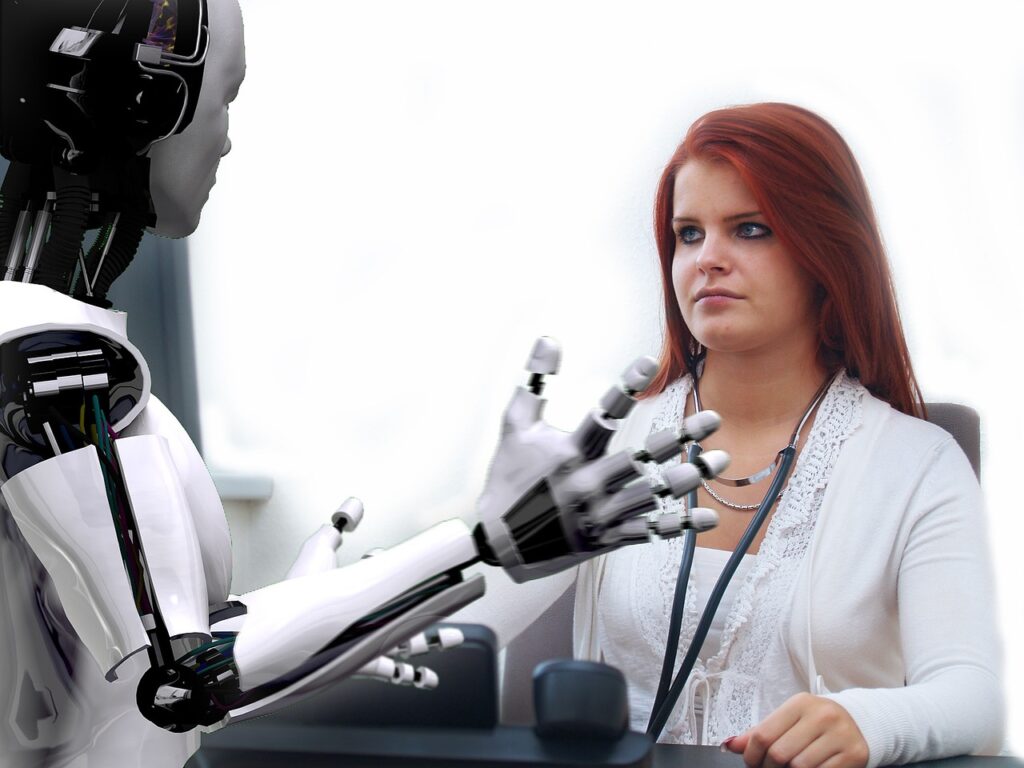
The number one fear people have when it comes to artificial intelligence (AI) is: Loss of control. Why does this fear top the list? What is the truth behind this fear? What are the misperceptions and what is the reality when it comes to this fear? What are the legitimate concerns and how to address them? Let’s explore each.
Introduction
The number one fear people have when it comes to artificial intelligence is: Loss of control.
Why this fear tops the list?
It’s the core behind many other AI-related anxieties. People worry that AI systems could:
Related fears that stem from this:
The Truth Behind the Fear
The fear of losing control over AI isn’t entirely unfounded. As AI systems grow more sophisticated, they do operate with increasing levels of autonomy and complexity. However, this fear often stems from misunderstandings about how AI actually works and is deployed in the real world.
Today’s AI systems exist on a spectrum of autonomy. Most operate within strict parameters defined by their creators, with clear constraints on their functionality. While AI can make recommendations or perform specific tasks without direct human intervention, the vast majority of systems still require human oversight for critical decisions.
Common Misperceptions vs. Reality
Misperception: “AI has its own will and can decide to disobey humans”
Reality: Current AI systems, including the most advanced ones, don’t possess consciousness, desires, or motivations. They operate based on algorithms, training data, and optimization functions. They don’t “want” things or make decisions outside their programming parameters.
Misperception: “AI is rapidly approaching human-level general intelligence”
Reality: While AI has made remarkable progress in specific domains (like language processing, image recognition, and game playing), we remain far from artificial general intelligence (AGI) that can match human versatility across all cognitive tasks. Most AI systems excel at narrow applications but lack broader understanding.
Misperception: “Once AI surpasses human intelligence, it will inevitably turn against us”
Reality: This scenario, popularized by science fiction, assumes that intelligence automatically leads to malevolence or desire for control. However, goals and values are separate from intelligence. Advanced AI systems reflect the objectives programmed into them by humans, not inherent desires for domination.
Misperception: “AI decisions are completely inscrutable black boxes”
Reality: While some complex models (particularly deep learning systems) can be difficult to interpret, significant research is focused on explainable AI. Many industries already require AI systems to provide clear explanations for their outputs, especially in high-stakes domains like healthcare and finance.
Legitimate Concerns
Despite these misperceptions, there are genuine concerns about AI control that deserve serious attention:
Alignment Challenges
Ensuring AI systems reliably pursue the goals we actually want, rather than finding unexpected ways to optimize for programmed objectives, remains a significant technical challenge. This “alignment problem” requires continued research and careful system design.
Unintended Consequences
Complex AI systems interacting with complicated environments can produce unexpected behaviors. These aren’t due to AI “rebellion” but rather to the difficulty of anticipating all possible scenarios in which these systems will operate.
Power Concentration
As AI becomes more powerful, questions about who controls these systems and for what purposes become increasingly important. The concentration of advanced AI capabilities in a small number of organizations raises legitimate governance concerns.
Automation and Economic Disruption
While total job elimination from AI is unlikely, significant workforce transitions will occur. Without proper planning and policy responses, these shifts could create serious economic disruption for many workers and communities.
Addressing Legitimate Concerns
Technical Safeguards
The AI research community is actively developing methodologies for safer AI, including:
Governance Frameworks
Effective governance requires collaboration between:
Shared Responsibility
Addressing AI control requires participation from:
The Case for AI Education
The most powerful antidote to unfounded fears about AI control is education. Understanding how these systems actually work, their capabilities, and their limitations allows for a more nuanced perspective that neither dismisses legitimate concerns nor succumbs to exaggerated anxieties.
AI education empowers individuals to:
Start Your AI Education Journey
AI Certification Services offers comprehensive education programs designed to demystify artificial intelligence for professionals across industries. Our courses provide:
In a world increasingly shaped by artificial intelligence, education is the key to ensuring humans remain firmly in control of these powerful tools. Rather than fearing what we don’t understand, AI Certification Services helps you develop the knowledge to engage confidently with AI technologies and contribute to their responsible development.
The future of AI will be determined not by autonomous algorithms but by informed human choices. Start your journey toward AI literacy today with AI Certification Services and be part of ensuring that artificial intelligence remains a powerful tool for human flourishing.
Don’t get left behind in the AI revolution. Get certified today and transform the way you work with intelligent automation.
While we try to answer all your questions with our website and blogs, you may still have a few questions for us to answer. We’d love to hear from you!